Hingham Neighborhoods Lifestyle Guide Beyond Downtown
July 16, 2026
July 16, 2026
After showing homes throughout Hingham, I've learned that buyers often arrive with one neighborhood in mind and leave loving a completely different one. The couple convinced they wanted to live near the harbor discovers they value an easier commute. The family focused on Hingham Centre falls in love with the larger lots and quieter streets in another part of town.
That's because Hingham isn't one neighborhood. It's a collection of distinct communities, each with its own personality, lifestyle, housing styles, and advantages.
If you're relocating to the South Shore, moving within Hingham, or simply trying to understand where your home fits into today's market, here's what I think you should know before you start touring.
If you're looking for... | Consider... |
|---|---|
Harbor views and coastal living | Crow Point |
Historic New England charm | Hingham Centre |
Easy Boston commute | West Hingham |
Newer homes, condos and low maintenance living | Shipyard, Beal Street, Route 3A corridor |
Outdoor recreation | World's End, Bare Cove Park area |
Long term redevelopment potential | South Hingham |
The best neighborhood isn't necessarily the most expensive or the most well known. It's the one that fits how you actually live.
On paper, Hingham is about 22 square miles with more than 20 miles of shoreline. In practice, every section of town offers a different experience.
The northern side of town grew around the harbor, creating walkable streets, historic homes, and a distinctly coastal atmosphere. As you move farther south and west, neighborhoods become more suburban, with larger lots, newer homes, and different commuting options.
That's one of the reasons Hingham appeals to such a wide variety of buyers. Whether you're searching for an antique colonial, a waterfront property, a condominium with less maintenance, or a family home close to the commuter rail, you'll likely find it here. The challenge isn't deciding whether Hingham is the right town. It's deciding which part of Hingham feels most like home.
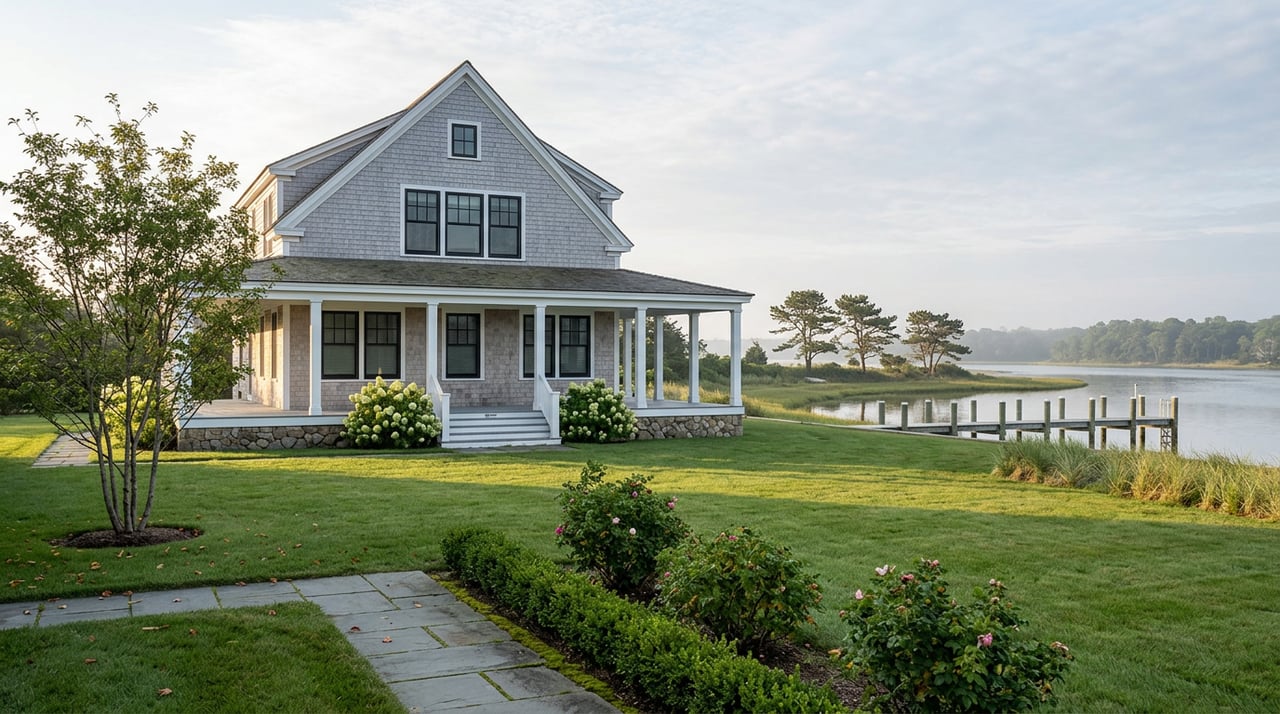
The Crow Point neighborhood sits along Hingham Harbor and offers a lifestyle that's difficult to replicate elsewhere on the South Shore. Waterfront homes, quiet residential streets, mature landscaping, and easy access to the harbor give the area a relaxed coastal feel throughout the year.
Even if you're not buying directly on the water, you'll enjoy nearby marinas, public waterfront spaces, walking paths, and harbor views that become part of everyday life. It's quiet, more residential, and offers a classic New England waterfront character that's hard to appreciate until you're standing there.
One piece of advice I give every waterfront buyer is simple: evaluate each property individually.
Flood zone designations, insurance requirements, and elevation can vary dramatically from one street to the next. Never assume two homes share the same risk simply because they're in the same neighborhood. It's always worth reviewing FEMA flood maps, town GIS resources, and insurance considerations before making an offer.
One of Hingham's greatest assets isn't a neighborhood at all, it's World's End.
Managed by The Trustees, this spectacular waterfront reservation offers miles of walking trails, panoramic views of Boston Harbor, rolling hills, and some of the most beautiful scenery on the South Shore. For many buyers, having World's End nearby becomes just as important as the home itself.
If you enjoy walking, running, photography, kayaking, or simply being outside, living nearby can dramatically change your daily routine.
The same is true for Bare Cove Park and nearby conservation land, which give residents access to miles of additional trails and open space. These outdoor amenities are one of the reasons Hingham consistently attracts buyers relocating from Boston who want more space without giving up an active lifestyle.
If your dream home includes tree lined streets, historic architecture, and neighborhoods with generations of history, Hingham Centre deserves a closer look. These neighborhoods showcase much of what people picture when they imagine a traditional New England town.
Historic homes sit alongside beautifully preserved streetscapes, churches, schools, and local gathering places that have shaped the community for generations. There's an authenticity here that's difficult to recreate through new construction.
It's also important to understand that many of these homes fall within Hingham's local historic districts. For buyers, that means renovations affecting the exterior may require review by the Historic Districts Commission. Some people initially see that as a drawback.
Personally, I think it's one of the reasons these neighborhoods have maintained their charm so successfully. The protections help preserve the architectural character that attracted buyers in the first place.
Not every buyer prioritizes walkability to the harbor. For many of my relocation clients, the first question is simply:
"How easy is the commute?"
That's where West Hingham stands out. With convenient access to the Greenbush commuter rail, major roadways, and nearby services, West Hingham offers an excellent balance between suburban living and regional accessibility. It's also one of those neighborhoods buyers frequently overlook before touring.
Many arrive expecting to focus exclusively on Hingham Centre or Crow Point. After driving through West Hingham, they realize it offers exactly what their daily routine requires. Lifestyle almost always wins over preconceived ideas.
Families moving to Hingham understandably spend a great deal of time researching schools. One thing I always remind buyers is that school assignments are based on the property's specific address, not simply the neighborhood name. Two homes located relatively close together may be assigned to different elementary schools.
Before falling in love with a property, it's worth confirming the current school assignment directly with Hingham Public Schools. Doing that early can prevent surprises later in the buying process.
South Hingham doesn't always make the top of buyers' wish lists, but I think it's one of the more interesting parts of town to keep an eye on.
Unlike the harbor neighborhoods, South Hingham has room to evolve. Over the past several years, town planning has focused on thoughtful redevelopment rather than large-scale expansion, particularly around the Route 3A corridor and areas south of Whiting Street. The goal isn't to dramatically change Hingham's character. It's to encourage carefully planned growth where existing infrastructure already exists.
For buyers, that could mean more housing choices over time. For homeowners, it means understanding that today's neighborhood may continue to improve as new investment arrives.
It's one of those areas where I encourage clients to think not only about today's value, but where the neighborhood may be five or ten years from now.
Not everyone moving to Hingham wants an antique Colonial or a large yard to maintain. Many buyers, especially empty nesters, professionals relocating from Boston, or homeowners moving from larger suburban properties, are looking for something simpler. That's where the Beal Street and Route 3A corridor comes into the conversation.
This area offers a mix of newer condominiums, apartments, townhomes, and low maintenance living with convenient access to shopping, restaurants, Bare Cove Park, and major commuter routes. It's a very different lifestyle than you'll find in Hingham Centre or Crow Point.
Rather than spending weekends maintaining a large property, many residents choose to spend their time traveling, boating, walking the trails at Bare Cove, or enjoying everything the South Shore has to offer. For the right buyer, that's an easy tradeoff.
The Hingham Shipyard offers waterfront restaurants, fitness services, marina access, entertainment, and one of the easiest commutes into Boston via the MBTA Ferry. It's also home to several condominium communities that appeal to buyers looking for convenience and a true lock-and-leave lifestyle.
I often tell relocation clients that the Shipyard feels different from almost anywhere else on the South Shore. It has a more urban energy while still giving you the benefits of living in a coastal New England town. Some buyers love that atmosphere. Others discover they prefer the quieter residential feel of nearby Crow Point or Hingham Centre.
The only way to know is to experience both.
One of the biggest mistakes I see buyers make is trying to choose a neighborhood before they understand how they want to live. Instead, I encourage clients to answer a few simple questions first.
Do you picture yourself walking along the harbor after dinner?
Do you need a straightforward commute into Boston several days each week?
Would you rather own a historic home with character or something newer that requires less maintenance?
Is outdoor recreation part of your daily routine?
Will your children be attending Hingham Public Schools?
Once those priorities become clear, the right neighborhoods usually become obvious. I've had countless buyers completely change their minds after spending a day touring Hingham. The neighborhood they thought they wanted often isn't the one they choose. That's one of the reasons I always recommend seeing several different areas before making a decision.
If you're moving from another part of Massachusetts, or especially from another state, don't rely solely on online listings. Photos can show you a beautiful kitchen. They can't tell you what the neighborhood feels like on a Tuesday evening.
They can't show you where neighbors gather, how much traffic passes during rush hour, or how often you'll find yourself walking to the waterfront, the train station, or your favorite coffee shop. That's why I encourage buyers to spend time driving through several neighborhoods, visiting at different times of day, and thinking about what everyday life will actually look like.
Choosing the right home matters but choosing the right neighborhood matters even more.
Crow Point is one of Hingham's most sought-after waterfront neighborhoods thanks to its harbor views, coastal atmosphere, and proximity to marinas, beaches, and public waterfront spaces. Buyers should always verify flood zone information for individual properties before purchasing.
West Hingham is often the first neighborhood I recommend to buyers who commute regularly. With convenient access to the Greenbush commuter rail, major roadways, and nearby services, it offers an excellent balance between suburban living and regional accessibility. The Shipyard is another popular option for buyers planning to use the MBTA Ferry.
The Shipyard, Beal Street, and portions of the Route 3A corridor offer many of Hingham's newer condominiums, townhomes, and low maintenance housing options.
Hingham Centre is known for their historic homes, preserved streetscapes, and classic New England charm. Buyers should understand that exterior renovations within local historic districts may require approval from the Historic Districts Commission.
South Hingham continues to be an area worth watching. While it has a different feel than the harbor neighborhoods, thoughtful redevelopment and infrastructure improvements may create additional opportunities for buyers and homeowners over the coming years.
One of the things I enjoy most about helping clients move to Hingham is watching their priorities evolve.
Almost everyone starts by asking which neighborhood is the "best." By the end of our tours, they're asking a much better question: Which neighborhood feels most like home?
That's the beauty of Hingham. Every part of town offers something different. Whether you're drawn to the harbor, historic homes, commuter convenience, or newer low maintenance living, there's a neighborhood that fits your lifestyle.
If you're weighing a move within Hingham, thinking about the South Shore more broadly, or getting ready to list, I'd love to help you think through it. What matters most to you in your next home, water, walkability, schools, or something else? Reach out to me and let's talk through it.
Stay up to date on the latest real estate trends.

Snow Bird
2026 Guide

Luxury Real Estate
Get assistance in determining current property value, crafting a competitive offer, writing and negotiating a contract, and much more. Contact me today.