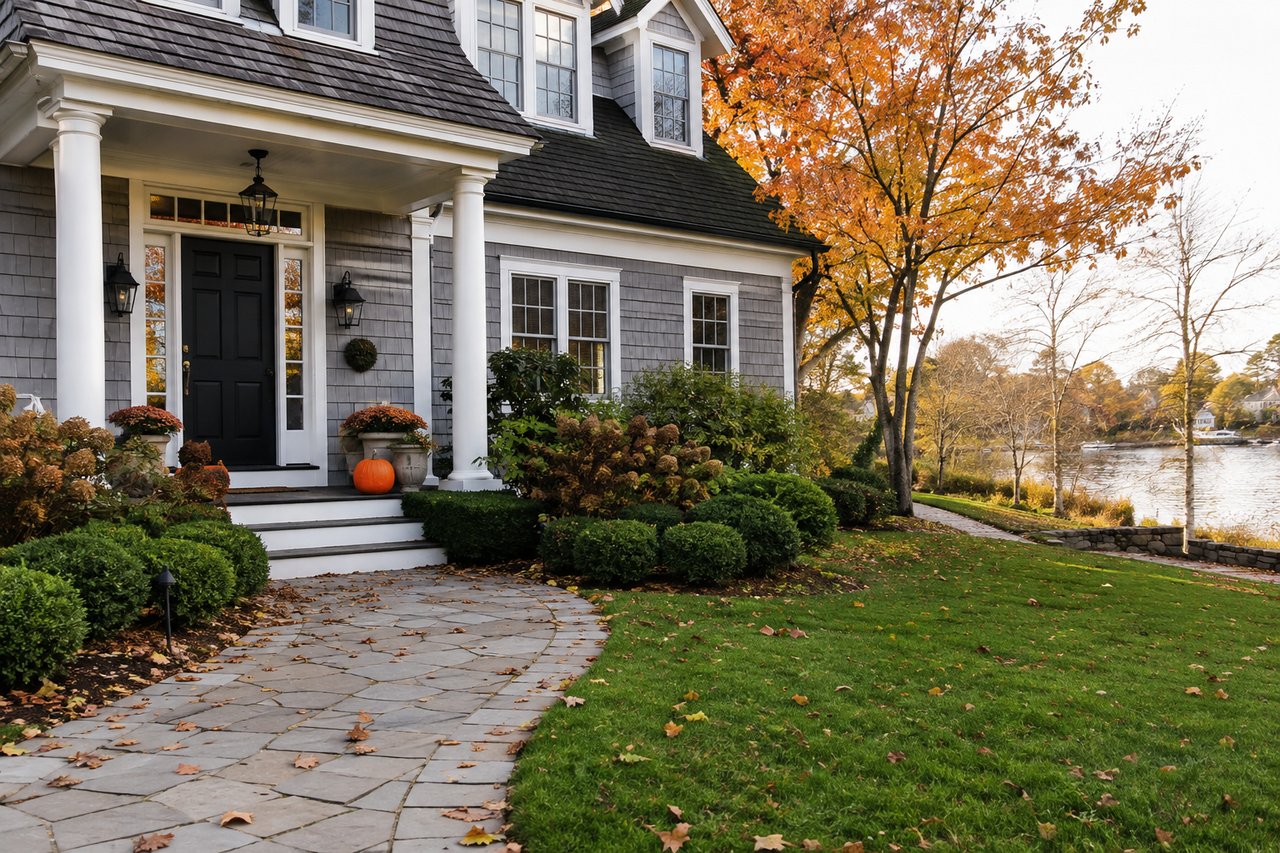
Your Fall Home Maintenance Checklist for South Shore Massachusetts
Luxury Real Estate Erin Freeman September 3, 2026
Luxury Real Estate Erin Freeman September 3, 2026
This fall marks two years since I purchased my home in Hingham, Massachusetts.
Coming from Florida, where “fall home maintenance” mostly meant checking the AC filter, my first New England autumn was a crash course I didn’t know I needed. Furnace tune-ups. Gutter cleaning. Irrigation blowouts. And a very real conversation about what happens to outdoor pipes when the temperature drops below freezing.
Two years later, I have a system.
Fall home maintenance on the South Shore is really about getting ahead of New England winter weather. Between freezing temperatures, snow, coastal wind, nor’easters and repeated freeze-thaw cycles, small issues in October have a way of becoming much more expensive problems by January.
So whether this is your first fall owning a home in Hingham or you’ve lived on the South Shore for decades, this is the fall maintenance checklist I use at my own house.
Don’t wait for the first cold snap to find out your furnace or boiler has a problem.
Schedule a professional heating system tune-up in early fall, change or clean filters, and make sure your thermostats are working correctly. If you have an older system, it’s also worth knowing its age and condition before winter begins.
In Massachusetts, a heating system failure in January isn’t just inconvenient. It can quickly become an emergency, particularly if freezing temperatures put your plumbing at risk.
If your property has mature oaks and maples, as many homes in Hingham, Cohasset, Scituate and Norwell do, your gutters can fill up surprisingly fast.
Clogged gutters prevent water from draining properly and can contribute to water getting behind siding, pooling near the foundation or freezing on walkways. They can also make winter ice problems worse.
I like to wait until most of the leaves are down and then have the gutters cleaned before winter. While you’re at it, check that your downspouts are clear and directing water several feet away from the foundation.
Fall is a good time to look for loose, damaged or missing shingles before snow, ice and winter winds arrive.
Pay particular attention to flashing around chimneys, skylights and roof penetrations, where leaks often begin.
If you have a wood-burning fireplace, have your chimney and fireplace inspected and cleaned as needed before the first fire of the season. Creosote buildup can create a serious fire hazard, and chimney problems are much easier to address before you’re actually using it.
Walk around your house and check windows and exterior doors for obvious drafts.
Replacing worn weatherstripping and sealing gaps around window and door frames can help keep cold air out and reduce heat loss. If your home has storm windows or removable screens, fall is also the time to make the seasonal switch.
This is particularly worth paying attention to in older South Shore homes, where original windows and doors can be part of the charm but not necessarily the energy efficiency.
This is the one first-year New England homeowners are most likely to overlook. I almost did.
Disconnect and drain garden hoses. Shut off the interior water supply to exterior faucets if your plumbing is designed that way, then drain the exterior line. If you have an irrigation system, schedule a professional blowout before freezing temperatures arrive.
Water left inside exposed plumbing can freeze, expand and damage pipes or fixtures. It’s a relatively simple fall task that can prevent a very expensive winter repair.
If you recently relocated to Massachusetts from a warmer climate, put this one near the top of your list.
New England’s freeze-thaw cycle is hard on masonry, asphalt and concrete.
Water gets into small cracks, freezes, expands and can make those cracks larger over the course of the winter.
Walk your driveway, front steps, patios and foundation and look for areas that need attention. Depending on the material and repair needed, early fall may still give you enough appropriate weather to address smaller issues before winter.
Also check exterior drainage. Water should move away from your house rather than collect near the foundation.
Living on the South Shore means preparing for more than snow. Coastal storms, high winds and nor’easters can bring down branches and turn loose outdoor items into problems quickly.
Look for dead or damaged limbs, particularly anything hanging over the roof, driveway, power lines or areas where people regularly walk.
This is also the time to secure or store outdoor furniture, umbrellas and other items you won’t be using through the winter.
When daylight saving time ends on November 1, use it as your reminder to test every smoke and carbon monoxide detector in the house.
Replace batteries where appropriate and check the manufacture or replacement dates on the units themselves.
With heating systems, fireplaces and other fuel-burning appliances being used more frequently, working carbon monoxide detectors are especially important during the colder months.
This one is easy to forget.
Lint buildup in a dryer vent can reduce efficiency and create a fire hazard. Clean the lint trap regularly, but also check the vent line running from the dryer to the exterior of your home.
If you can’t remember the last time the full dryer vent was cleaned, fall is a good time to put it on the list.
If you have a generator, test it before you need it.
Make sure it starts properly and follow the manufacturer’s recommendations for maintenance and safe operation. If you use a portable generator, review where it can safely be operated before an outage happens.
Do the same with your snow blower. Start it, check its condition and make sure you have whatever supplies or replacement parts you’ll need. Finding out your snow blower doesn’t work during the first storm is a very avoidable New England experience.
For a quick reference, here’s what I’m checking at my own Hingham home this fall:
Two years into owning a home in Hingham, my biggest lesson is that fall maintenance isn’t about doing everything in one weekend. It’s about working through the list while the weather is still cooperating, before you actually need any of these systems.
And as someone who relocated here from Florida, I can confirm there are some parts of owning a home in New England that no relocation checklist adequately prepares you for. Winterizing an outdoor faucet was definitely one of them.
If you’re new to the South Shore, save this list for October. If you’ve lived here forever, I’m curious: what’s the one fall maintenance task you think everyone forgets?
And if buying, selling or relocating to Hingham, Cohasset, Scituate, Norwell or elsewhere on the South Shore is part of what’s ahead for you, I’m always happy to help you think through the move and what homeownership here actually looks like.
Erin Freeman | Sotheby’s International Realty
Serving Hingham, Cohasset, Scituate, Norwell and the South Shore of Massachusetts
South Shore homeowners should winterize irrigation systems before sustained freezing temperatures arrive. Many homeowners schedule professional sprinkler blowouts in October, rather than waiting for the first hard freeze. The goal is to remove water from irrigation lines before it has an opportunity to freeze and damage the system.
Disconnect hoses and winterize exterior faucets before freezing temperatures become regular. Homes with interior shutoff valves for exterior plumbing should have those lines shut off and drained according to the home’s plumbing configuration.
Early fall is a practical time to have a furnace or boiler serviced because it allows you to identify problems before the heating season begins. Annual maintenance may also be recommended by the equipment manufacturer or service provider.
Chimneys and fireplaces should be inspected regularly, particularly when they are actively used. How often cleaning is necessary depends on the fireplace, fuel type and amount of buildup, so an inspection is the best way to determine whether sweeping is needed before the heating season.
South Shore Massachusetts homes are exposed to a combination of freezing temperatures, snow, rain, coastal wind and repeated freeze-thaw cycles. Fall maintenance focuses on keeping water away from the home, protecting plumbing, preparing heating systems and identifying exterior problems before winter weather can make them worse.
If you’re relocating to Massachusetts from Florida or another warm-weather state, prioritize winterizing exterior plumbing and irrigation, servicing the heating system, cleaning gutters, checking the roof, preparing for snow removal and understanding how your particular home handles freezing temperatures. These are seasonal tasks homeowners in warmer climates may never have needed to consider.
Stay up to date on the latest real estate trends.

Snow Bird
2026 Guide

Luxury Real Estate
Get assistance in determining current property value, crafting a competitive offer, writing and negotiating a contract, and much more. Contact me today.