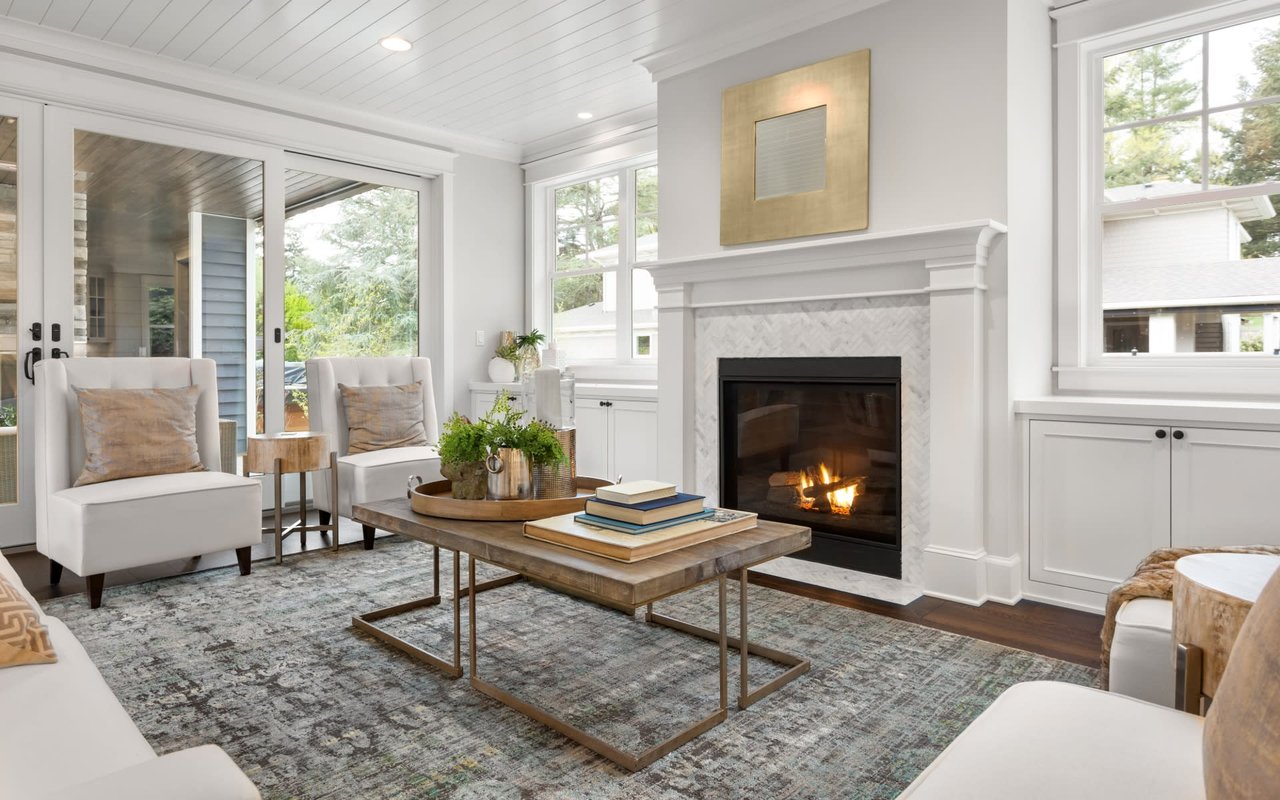
Understanding Your South Shore Home Value Today
selling Erin Freeman February 25, 2026
selling Erin Freeman February 25, 2026
If you’ve checked Zillow, Redfin, or Realtor.com, you’ve probably seen three completely different numbers. That’s your first clue. Your home’s value is not a single number. And it’s almost never the one you see online.
On the South Shore, value depends on your town, your specific neighborhood, recent comparable sales, current buyer behavior, and how your home would actually be positioned if it came to market.
That last part matters more than most people realize.
Automated valuation models can’t see what actually drives pricing here. They cannot distinguish between two homes on the same Hingham street where one backs to conservation land and the other sits on a tight corner lot.
They don’t understand walkability to the harbor, proximity to the train, or whether you’re in a hyper-desirable school pocket. They rely on closed sales, often 3 to 6 months old. They don’t measure current buyer urgency. And they cannot evaluate condition, layout, updates, or presentation. Two colonials that look similar on paper can be separated by $200,000 once buyers walk through them.
Using full-year MLS statistics for single-family homes in Hingham, here’s how the market shifted from 2024 to 2025.
Translation: fewer homes traded, but they sold faster and for more money. That’s not a softening market. That’s selective, competitive demand. Well-positioned homes are still moving.
What should my house be worth? That’s not the real question. The real question is: What would a qualified buyer pay for it today? The gap between those two numbers is where pricing strategy lives.
Overpricing by even 5 to 10 percent can stall momentum during the first 10 to 14 days, the most critical window for leverage. Once that window closes, you don’t get to recreate it.
The best result is not just the highest headline number. It’s the strongest buyer, the cleanest terms, minimal contingencies, and the least amount of renegotiation.
I’ve seen sellers push for the absolute top number only to face inspection concessions, appraisal gaps, or extended market time that ultimately weakens their position. A strategic price protects leverage. An emotional price erodes it.
Pricing starts with understanding the property itself. I walk the home. I identify selling strengths and potential objections. I evaluate condition, layout flow, updates, and lot characteristics.
Then I analyze micro-neighborhood sales, comparable properties from the last 6 to 12 months, current buyer activity, seasonality, interest rate sensitivity, and your timeline and risk tolerance. I model multiple price bands based on your goals. The objective isn’t to guess a number. It’s to identify the range where your home becomes competitive while still aligning with what you want from the sale.
Most homeowners don’t need a number immediately. They need context. When you understand how your home fits within its town, price bracket, and micro-market, pricing becomes strategic instead of stressful.
If you’re curious where your home might land in today’s market, you can start with the home value tool linked below. It uses real local MLS data and current activity to provide a more grounded snapshot than a generic algorithm.
It’s not a final answer. But it’s a smarter starting point.
Stay up to date on the latest real estate trends.

Snow Bird
2026 Guide

Luxury Real Estate
Get assistance in determining current property value, crafting a competitive offer, writing and negotiating a contract, and much more. Contact me today.